Mortgage Fraud Warning Signs in New Jersey: 7 Alarming Red Flags and How to Report Them Fast
Spot mortgage fraud warning signs in New Jersey before it costs you your home. Learn the red flags and exactly who to call to report it.
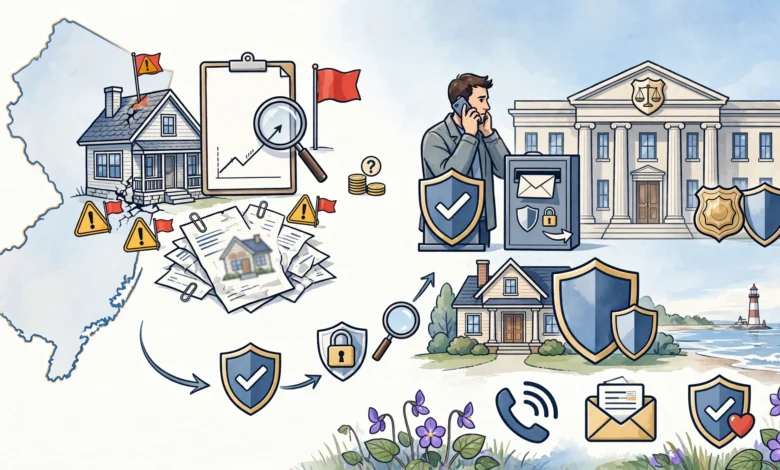
Mortgage fraud warning signs in New Jersey show up more often than most homeowners realize, and by the time people notice something is wrong, they’ve usually already signed something they shouldn’t have. Whether it’s a stranger promising to “save your home” from foreclosure, a lender who keeps changing your loan terms at the closing table, or a wire transfer request that seems just a little off, mortgage fraud in New Jersey has gotten more sophisticated over the past few years. The scams aren’t always obvious con jobs anymore. Some of them look like normal paperwork.
New Jersey has one of the highest home values in the country, which makes it an attractive target for people looking to exploit buyers, sellers, and homeowners in financial distress. Mortgage fraud costs victims their savings, their credit, and in the worst cases, their homes. It also costs lenders and taxpayers billions of dollars a year nationally, according to the FBI.
This article walks through the most common mortgage fraud red flags in NJ, explains how these scams actually work, and gives you a clear, step-by-step path for reporting fraud to the right state and federal agencies. If you’re buying a home, refinancing, facing foreclosure, or just want to protect an aging parent from a predatory scheme, this guide will help you recognize trouble before it’s too late.
What Is Mortgage Fraud, Exactly?
Mortgage fraud is any material misstatement, misrepresentation, or omission made during the mortgage origination, closing, refinancing, or foreclosure process, with the intent to deceive a lender, borrower, or other party for financial gain. It generally falls into two categories:
- Fraud for profit — Industry insiders (loan officers, appraisers, title agents, or brokers) inflate property values, falsify documents, or divert funds for personal gain.
- Fraud for housing — A borrower misrepresents income, employment, or debts to qualify for a loan they otherwise couldn’t get, usually because they genuinely want the property.
Both types are illegal under New Jersey and federal law, but the schemes that hurt everyday consumers the most are the ones where someone else is defrauding you, not the other way around. That’s the focus of this guide.
Why New Jersey Homeowners Are Frequent Targets
New Jersey combines dense population centers, high property values, and a large number of homeowners who are behind on payments or going through foreclosure, all of which make the state attractive to fraudsters. The New Jersey Department of Banking and Insurance (NJDOBI) regulates mortgage lenders and brokers in the state and has issued multiple consumer bulletins warning about wire fraud schemes targeting real estate closings, where hackers spoof emails from title companies or lenders to redirect closing funds into criminal accounts.
Foreclosure rescue scams also spike in New Jersey during periods of economic uncertainty, when distressed homeowners are more likely to trust anyone who claims they can stop a sheriff’s sale.


7 Mortgage Fraud Warning Signs in New Jersey
Here are the red flags that show up most consistently in real cases, whether you’re buying, refinancing, or trying to hold onto a home you already own.
1. Last-Minute Changes to Wiring Instructions
This is the single most common mortgage-related scam active in New Jersey right now. A buyer receives an email, seemingly from their title company or attorney, saying the wiring instructions for closing funds have changed. The email often looks legitimate because the scammer has hacked into a real email account in the transaction chain.
Warning signs:
- An email asking you to wire funds to a “new” account, especially close to closing day
- Pressure to act immediately, without time to verify
- Slightly altered email addresses (one letter off from the real domain)
Always confirm wiring instructions by phone, using a number you already have on file, never one provided in the suspicious email itself.
2. Guarantees to “Save Your Home” From Foreclosure
Foreclosure rescue fraud targets homeowners who are behind on payments. Scammers pose as consultants, attorneys, or “distressed property specialists” and promise to negotiate with your lender, halt foreclosure, or get you a loan modification, usually for an upfront fee.
Warning signs:
- Requests for payment before any service is performed
- Instructions to stop paying your mortgage or your lender directly and pay the “company” instead
- Pressure to sign over the deed to your home “temporarily”
- Claims of a special relationship with your lender or the courts
Legitimate housing counselors approved by HUD never charge large upfront fees and never ask you to sign your deed away.
3. Pressure to Inflate Income or Assets on Loan Applications
If a loan officer, broker, or “helper” suggests fudging your income, overstating your down payment funds, or leaving off debts to help you qualify, that’s income fraud, and you can be held liable even if someone else suggested it. This is one of the most underreported forms of mortgage fraud in New Jersey because borrowers often don’t realize they’ve become part of the scheme.
Warning signs:
- Someone tells you “just put down a bigger number” for income
- You’re asked to sign blank or partially completed forms
- Pay stubs or bank statements look edited or don’t match what you actually submitted
4. Appraisal Numbers That Don’t Match Reality
Appraisal fraud happens when an appraiser, working with a broker or seller, inflates a property’s value to secure a bigger loan than the home is actually worth. This was rampant during the 2008 housing crisis and still shows up in New Jersey, particularly in flip transactions and cash-out refinances.
Warning signs:
- An appraisal that comes in suspiciously close to the exact loan amount needed
- A property that recently sold for significantly less than the new appraised value
- Pressure from a broker to use “their” appraiser instead of an independent one
5. Unlicensed or Unregistered Loan Originators
Every mortgage broker and loan originator operating in New Jersey must be licensed through the NJDOBI and registered with the Nationwide Multistate Licensing System (NMLS). Fraudsters posing as brokers frequently operate without any license at all, especially in communities where people are less likely to check credentials.
Warning signs:
- The person can’t or won’t provide an NMLS number
- No physical office address, or the address doesn’t match a real licensed business
- Deals conducted entirely over text message or informal channels
You can verify any mortgage professional’s license directly through the NMLS Consumer Access website before signing anything.
6. Straw Buyer or Identity-Related Red Flags
Straw buyer schemes involve using someone else’s name, credit, or identity to obtain a mortgage, often without that person’s full understanding of what they’re agreeing to. This shows up in “investment opportunity” pitches where someone asks a friend, relative, or acquaintance with good credit to “help” buy a property they’ll never actually live in or control.
Warning signs:
- You’re asked to apply for a mortgage on a property you won’t live in or manage
- Someone offers to pay you for using your name and credit on a loan application
- You’re told your involvement is “just a formality” and you won’t have real responsibility for the loan
This is a felony, and the person whose name is used is often left holding the legal and financial consequences.
7. Loan Modification or Refinance Companies That Contact You First
If a company reaches out to you unprompted, especially by phone, text, or mailer, promising a modification, refinance, or debt forgiveness deal that sounds too good to be true, treat it with suspicion. Legitimate lenders rarely cold-call distressed homeowners with guaranteed solutions.
Warning signs:
- Robocalls or mailers referencing your specific mortgage details
- “Government program” language used to sound official when it isn’t affiliated with any real agency
- Requests for your Social Security number or account information before any real application process begins
How Mortgage Fraud Actually Plays Out in New Jersey
Most cases don’t start with an obvious criminal pitch. They start with something that feels like ordinary paperwork: an email from someone who already knows details about your closing, a phone call referencing your actual loan balance, or a broker who seems a little too eager to make numbers work. The New Jersey Office of the Attorney General and NJDOBI have both noted that email-based wire fraud targeting real estate closings has grown steadily, in part because scammers now research their targets on public property records before making contact.
The financial damage is often irreversible. Wired funds sent to a fraudulent account are extremely difficult to recover once the money moves overseas or through a chain of accounts, which is why speed matters enormously in reporting.
How to Report Mortgage Fraud in New Jersey
If you suspect mortgage fraud, whether you’re a victim or you’ve simply spotted suspicious activity, report it immediately to more than one agency. Different agencies have different jurisdiction, and reporting to multiple bodies increases the odds of a real investigation.
Step 1: Contact Your Bank Immediately (If Money Was Wired)
If you’ve already wired funds to a suspicious account, call your bank within minutes, not hours. Ask them to issue a wire recall request. There’s a narrow window, sometimes just a few hours, where funds can potentially be frozen before they’re moved again.
Step 2: Report to the New Jersey Department of Banking and Insurance
NJDOBI handles complaints involving licensed mortgage brokers, lenders, and loan originators operating in the state. You can file a complaint through their Consumer Inquiry and Response Center.
- Phone: (609) 292-7272 or Consumer Hotline (800) 446-7467
- Mail: NJDOBI, Consumer Inquiry and Response Center, P.O. Box 471, Trenton, NJ 08625-0471
Step 3: File a Complaint With the NJ Division of Consumer Affairs
The NJ Division of Consumer Affairs, part of the Office of the Attorney General, investigates fraud, deceptive business practices, and predatory lending complaints statewide.
- Phone: (800) 242-5846
- Online: File a complaint through the New Jersey Division of Consumer Affairs complaint portal
Step 4: Report to the FBI
Mortgage fraud that crosses state lines or involves wire transfers, identity theft, or organized schemes falls under federal jurisdiction. Report it to the FBI’s Newark Field Office or file a complaint with the Internet Crime Complaint Center.
- FBI Newark Field Office: (973) 792-3000
- Online: Submit a report to the FBI’s Internet Crime Complaint Center (IC3), which is the standard channel for reporting wire fraud and internet-facilitated financial crime
Step 5: Notify HUD if a Federal Loan or Housing Counselor Is Involved
If your fraud involves an FHA loan, a HUD-approved housing counselor, or a foreclosure rescue scam, the U.S. Department of Housing and Urban Development (HUD) Office of Inspector General handles those complaints directly.
- Phone: (800) 347-3735
- Online: File a complaint through HUD’s Office of Inspector General
Step 6: File a Report With Local Police
A local police report creates an official record that can support insurance claims, bank disputes, and future investigations. This step is easy to overlook, but it matters, particularly if you need documentation for a wire recall or fraud claim later.
Step 7: Consider Contacting a Real Estate or Consumer Protection Attorney
For cases involving significant financial loss, straw buyer schemes, or ongoing foreclosure proceedings, an attorney experienced in New Jersey real estate fraud can help you understand your legal options, including civil claims against the parties responsible.
Protecting Yourself Before Fraud Happens
Prevention is far easier than recovery. A few habits go a long way toward avoiding mortgage fraud in New Jersey:
- Verify any wiring instructions by phone using a known number, never a number from an email
- Check any broker or loan originator’s license through NMLS Consumer Access before signing paperwork
- Be skeptical of anyone who contacts you first with a guaranteed loan modification or refinance offer
- Never sign blank forms or documents you haven’t fully read
- Get a second opinion from a HUD-approved housing counselor if you’re facing foreclosure
- Slow down. Legitimate lenders don’t need you to make split-second decisions
Frequently Asked Questions
Is mortgage fraud a felony in New Jersey? Yes. Depending on the amount involved and the nature of the scheme, mortgage fraud in New Jersey can be prosecuted as a second, third, or fourth-degree crime under state law, in addition to potential federal charges when wire transfers or interstate communication are involved.
Can I get my money back if I wired funds to a scammer? Sometimes, but only if you act fast. Banks can sometimes recall a wire within hours of the transfer, but once funds move through multiple accounts, recovery becomes very difficult. This is why immediate reporting matters so much.
What’s the difference between mortgage fraud and predatory lending? Mortgage fraud involves intentional deception to obtain money or property illegally. Predatory lending refers to unfair or abusive loan terms, such as excessive fees or hidden costs, that may be legal on paper but designed to exploit a borrower’s lack of knowledge. The two sometimes overlap.
Who investigates mortgage fraud in New Jersey? NJDOBI, the NJ Division of Consumer Affairs, local police departments, and federal agencies including the FBI and HUD’s Office of Inspector General all have some jurisdiction depending on the specifics of the case.
Conclusion
Mortgage fraud warning signs in New Jersey rarely announce themselves clearly. They show up as a last-minute email about wiring instructions, an unsolicited call promising to stop foreclosure, or gentle pressure to round up a number on a loan application. Knowing the red flags, unlicensed brokers, inflated appraisals, guaranteed loan rescues, and unexpected wire changes, gives you the best chance of catching a scam before it costs you real money or your home. If you suspect fraud, don’t wait: contact your bank immediately if funds were wired, then report the incident to NJDOBI, the NJ Division of Consumer Affairs, the FBI, and, if applicable, HUD. Acting quickly and reporting through multiple channels is the most effective way to limit the damage and help investigators hold the people responsible accountable.