How to Stop a Foreclosure in Virginia: 7 Proven Legal Options for Homeowners
Facing foreclosure in Virginia? Discover 7 proven legal options homeowners can use to stop foreclosure and protect their home.
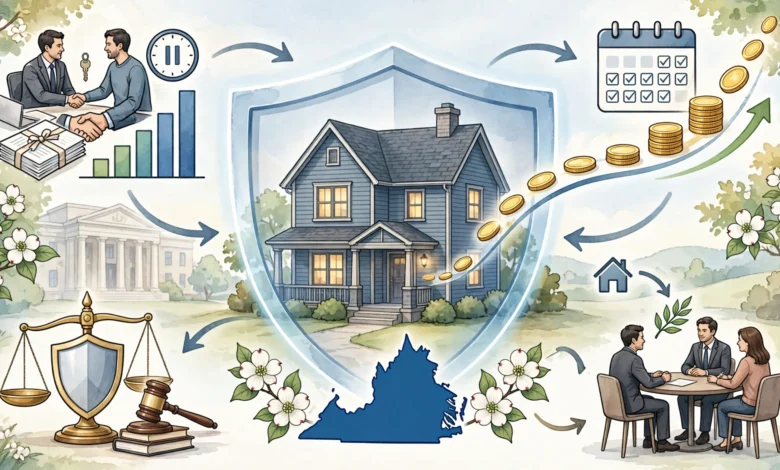
If you’ve missed a mortgage payment or two and you’re starting to panic, you’re not alone. How to stop a foreclosure in Virginia is one of the most common questions homeowners search for once a lender sends that first default notice. The good news is that you have more options than you probably think, but the timeline in Virginia is tight, so acting fast matters more here than in almost any other state.
Virginia is what’s known as a non-judicial foreclosure state. That means your lender doesn’t have to go through court to take your home. All they need is a properly executed deed of trust and a few legal notices. Compare that to a judicial state, where a lender has to file a lawsuit and get a judge’s sign-off, and you can see why Virginia foreclosures tend to move faster and with less oversight than homeowners expect.
That said, “fast” doesn’t mean “impossible to stop.” Between reinstatement, loan modification, bankruptcy protection, and a handful of other legal tools, there are real, workable paths to keep your home or at least walk away on your own terms instead of the bank’s. This guide walks through exactly what those options look like, how Virginia law shapes them, and what you should be doing right now if a foreclosure sale date is already on the calendar.
Understanding the Foreclosure Process in Virginia
Before diving into how to stop foreclosure in Virginia, it helps to understand how the process actually unfolds. Most Virginia homeowners sign two documents when they buy a home: a promissory note (your promise to repay the loan) and a deed of trust, which gives the lender the right to sell your home through a trustee if you default. This is different from a traditional mortgage document used in judicial states, and it’s the reason Virginia foreclosures can move quickly.
The General Timeline
Here’s roughly how the process plays out:
- Missed payment and grace period. Most servicers give you 10 to 15 days before charging a late fee.
- Delinquency notices. After about 36 days of missed payments, federal rules require your servicer to reach out and discuss your options.
- 120-day protection window. Under federal mortgage servicing law, a servicer generally can’t start the foreclosure process until you’re more than 120 days past due, giving you time to apply for loss mitigation.
- Notice of sale. Once foreclosure begins, Virginia law requires the lender or trustee to mail you a notice of sale at least 60 days before the auction if the home is owner-occupied.
- Published notice. The sale must also be advertised in a local newspaper, generally once a week for two weeks.
- Foreclosure auction. If nothing changes before the sale date, the trustee auctions the property, often on the courthouse steps or online.
One detail that surprises a lot of homeowners: Virginia law does not guarantee a right to reinstate your loan before the sale, and there’s no post-sale redemption period once a non-judicial foreclosure closes. That’s a big departure from states like California or Florida, and it’s exactly why moving early gives you far more leverage than waiting until the week of the auction.
1. Reinstate the Loan
Reinstatement is often the cleanest way to stop a foreclosure in Virginia if you have access to funds. It means paying everything you owe, missed payments, late fees, and any legal costs the lender has racked up, in one lump sum to bring your loan current.


A few things to keep in mind:
- Lenders typically won’t accept a partial payment once you’re several months behind, so you’ll usually need the full arrears amount.
- Because Virginia law doesn’t require lenders to offer reinstatement, it’s up to your servicer’s internal policy or your loan documents whether this option stays on the table right up to the sale date.
- If you go this route close to the auction date, confirm in writing that the funds were received and that the sale has actually been cancelled. Foreclosure sales have gone forward due to paperwork mix-ups even after a borrower paid.
2. Request a Repayment Plan
If you’re only one or two payments behind and you’re confident you can afford your regular mortgage payment going forward, a repayment plan might be the simplest fix. Your servicer agrees to let you catch up gradually, tacking a little extra onto your normal payment each month until the arrears are cleared.
This option works best for temporary setbacks, a short gap in employment or an unexpected medical bill, rather than long-term affordability problems. Once you’re three or more payments behind, most servicers shift your file to a default management or loss mitigation department, and a simple repayment plan becomes less likely to be approved on its own.
3. Apply for Forbearance
Forbearance temporarily reduces or pauses your mortgage payments for an agreed period, usually a few months, while you get back on your feet. Unlike a repayment plan, forbearance doesn’t require you to keep making full payments during the hardship window.
The catch is what happens afterward. Missed amounts don’t just disappear, they get added back in through a repayment plan, a loan modification, or a lump-sum payment once the forbearance period ends. Before agreeing to forbearance, ask your servicer exactly how the paused payments will be handled so you’re not blindsided later.
4. Pursue a Loan Modification
A loan modification permanently changes the terms of your mortgage, extending the length of the loan, adjusting the interest rate, or rolling missed payments and fees into the loan balance, so your monthly payment becomes affordable again.
Here’s the part many homeowners misunderstand: qualifying for a modification isn’t based on what you’d like to pay. It’s based on a formula your servicer runs using your income, your current loan balance, and the new interest rate and term they’re willing to offer. The principal amount you owe is rarely reduced, though it’s worth asking, since some limited principal-reduction programs still exist depending on your loan type.
If you have a VA-guaranteed loan, the Department of Veterans Affairs offers its own set of tools, including a Partial Claim program that pays your servicer directly to bring your loan current. Veterans and their surviving spouses can also get free counseling through a VA loan technician even on non-VA loans. You can learn more directly from the <cite index=”8-1″>Department of Veterans Affairs’ guidance on avoiding foreclosure</cite>.
5. File for Bankruptcy (Chapter 13 or Chapter 7)
Filing bankruptcy is one of the fastest and most powerful ways to stop a Virginia foreclosure, because it triggers something called an automatic stay. The moment you file, federal law halts virtually all collection activity, including a scheduled foreclosure sale, even if that sale is set for the very next morning.
Chapter 13 Bankruptcy
Chapter 13 is generally the better fit if your goal is to keep your home. It sets up a court-supervised repayment plan lasting three to five years, during which you resume your normal mortgage payments while catching up on the arrears through the plan. This is often the go-to option for someone who lost income temporarily, found new work, but can’t come up with the full missed-payment amount all at once.
Chapter 7 Bankruptcy
Chapter 7 discharges most unsecured debt, but it doesn’t erase a mortgage. It can buy you time and, in some cases, help you keep the home if you have enough exemption protection under Virginia’s debtor exemption laws, but if you have more equity than you can protect, the bankruptcy court could still require the home to be sold.
Because bankruptcy has long-term credit consequences and real complexity around exemptions and prior filings, it’s worth talking to a bankruptcy attorney before deciding which chapter, if either, makes sense for your situation.
6. Sell the Home: Short Sale or Traditional Sale
If keeping the home isn’t realistic, selling it, on your terms, is almost always better than letting it go to auction.
- Traditional sale. If you have equity, a normal sale before the auction date lets you pay off the loan and walk away with cash instead of nothing.
- Short sale. If you owe more than the home is worth, your lender may agree to accept the sale proceeds as full payment of the debt, even though it’s less than your balance. This requires lender approval, and if you have a second mortgage, getting that second lienholder on board can be harder since they typically absorb the bigger loss.
Either option generally requires you to move quickly, since a foreclosure sale date won’t wait for a slow closing.
7. Deed in Lieu of Foreclosure
A deed in lieu of foreclosure is a voluntary transfer of your home’s title back to the lender in exchange for being released from the mortgage debt. It’s typically faster and less damaging to your credit than a completed foreclosure, though it still shows up on your credit history and, for VA loan holders, can affect future loan benefits.
This is usually treated as a last resort when reinstatement, modification, and a sale all fall through, but it’s worth exploring instead of simply letting the auction happen, since it gives you a bit more control over the outcome and the timeline.
Watch Out for HOA and Judgment Lien Foreclosures
Most homeowners think only mortgage lenders can foreclose, but that’s not the full picture in Virginia. Homeowners’ associations and condo associations can also foreclose over unpaid dues, sometimes for surprisingly small balances, and these cases typically go through a judicial process rather than the faster non-judicial route. Separately, a creditor holding a judgment lien over $25,000 can, in limited cases, force the sale of your primary residence to satisfy that debt. Neither of these should be ignored just because they don’t come from your mortgage company.
Know Your Rights as a Virginia Homeowner
Virginia foreclosure law gives homeowners more protection today than it did before the 2008 foreclosure crisis. Some of your key rights include:
- Advance written notice. You must receive a notice of sale at least 60 days before an owner-occupied home can be auctioned, and it must explain how to reach legal aid and a HUD-approved housing counselor.
- Loss mitigation review. Federal servicing rules generally require your servicer to evaluate you for loss mitigation options before dual-tracking you into foreclosure.
- Military protections. Active-duty service members get additional safeguards under the Servicemembers Civil Relief Act.
- Right to challenge errors. If your servicer skipped a required step or violated state or federal rules, that may give you a legal defense or leverage to negotiate an alternative resolution.
For the full legal text governing notice requirements, you can review <cite index=”2-1″>Virginia’s statute on foreclosure sale notice requirements</cite> directly through the Code of Virginia.
Watch Out for Foreclosure Scams
Whenever a homeowner is desperate to stop a foreclosure, scammers show up. Be cautious of anyone who:
- Asks for upfront fees before doing any work
- Promises guaranteed loan modification approval
- Pressures you to sign over your deed quickly without independent legal review
- Contacts you out of the blue claiming to be affiliated with your lender or the government
If it sounds too good to be true, it almost always is. Free help is available through HUD-approved housing counselors and legal aid, so there’s rarely a good reason to pay someone upfront for foreclosure prevention advice.
Where to Get Free Help
You don’t have to figure this out alone. A few reliable places to start:
- HUD-approved housing counseling agencies, which can review your finances and walk you through loss mitigation options at no cost. The <cite index=”4-1″>U.S. Department of Housing and Urban Development offers foreclosure prevention resources</cite> and counselor referrals for homeowners nationwide.
- VALegalAid.org, which provides Virginia-specific foreclosure prevention guidance and, depending on your income, direct legal representation.
- A local foreclosure attorney, especially once a sale date has been scheduled or you suspect your servicer made an error.
Final Thoughts
The single biggest mistake homeowners make is waiting too long to act. Virginia’s non-judicial process moves fast, there’s no guaranteed right to reinstate, and there’s no redemption period once the sale is complete, so the earlier you engage with your servicer, a housing counselor, or an attorney, the more options stay open to you.
Conclusion
Facing foreclosure in Virginia is stressful, but it’s rarely a dead end. Whether you reinstate the loan, negotiate a repayment plan or forbearance, pursue a loan modification, file for Chapter 13 or Chapter 7 bankruptcy, sell the home outright or through a short sale, or hand back the deed in lieu of foreclosure, there’s almost always a legal path forward if you act before the sale date arrives. Virginia’s non-judicial foreclosure process moves quickly and offers fewer built-in protections than many other states, which makes it even more important to understand your rights, watch for scams, and reach out to a HUD-approved housing counselor or foreclosure attorney the moment you fall behind. The homeowners who come out of this situation best are almost always the ones who reached out for help early rather than waiting until the auction notice arrived.