Small Business Contract Mistakes: 7 Costly Errors That Get New York Owners Sued
Simple contract mistakes can land New York small business owners in court. Here's what to fix before you sign your next deal.
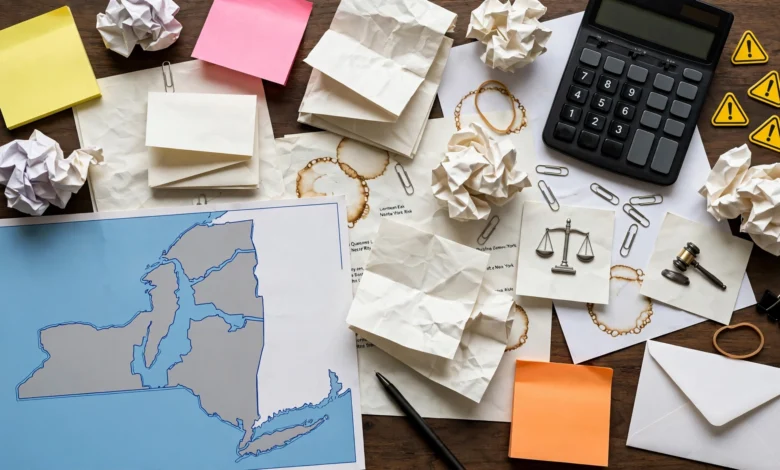
Small business contract mistakes are one of the fastest ways for a profitable company to end up in a courtroom. Most owners don’t get sued because they did something dishonest. They get sued because a contract was rushed, copied from a template, or left too vague to hold up when a client, vendor, or employee decides to walk away from an agreement.
New York is an especially tough place to get this wrong. The state has some of the busiest commercial courts in the country, a Statute of Frauds that trips up business owners who don’t know it exists, and a legal culture where disputes over even small contracts often end up formally litigated instead of quietly settled. A $5,000 disagreement with a contractor can turn into a $20,000 legal bill if the underlying agreement was never put in writing correctly.
This article walks through the small business contract mistakes that most commonly lead to lawsuits against New York owners, why each one is a problem under New York law specifically, and what to do instead. If you run a business in Brooklyn, Buffalo, Syracuse, or anywhere in between, these are the errors worth fixing before your next signature, not after you’re served with a summons.
Why Contract Mistakes Are So Common Among New York Small Business Owners
Most small business owners aren’t lawyers, and they shouldn’t have to be. But contracts are one of the few areas where “I’ll figure it out as I go” tends to backfire badly. A few reasons this happens so often in New York specifically:
- Speed pressure. Deals move fast in competitive markets like New York City, and owners sign or send agreements without a second read.
- Template reliance. Free contract templates found online are often written for a different state, or no state at all, and skip New York-specific requirements.
- Assumption of good faith. Owners assume a handshake deal or a friendly relationship will prevent disputes, which works right up until it doesn’t.
- Cost avoidance. Paying an attorney a few hundred dollars to review a contract feels unnecessary until a $50,000 dispute lands on the desk.
None of these reasons are unreasonable. But they’re exactly why contract mistakes are so widespread, and why insurance companies, business attorneys, and small claims courts in New York see the same patterns over and over again.
Mistake #1: Skipping a Written Contract Altogether
This is the single most common of all small business contract mistakes, and it’s the easiest to avoid. New York recognizes oral contracts as legally binding in many situations, but “legally binding” and “provable in court” are two very different things.
When there’s no written agreement, a dispute becomes a matter of one person’s word against another’s. Judges and juries have nothing concrete to point to, which means outcomes become unpredictable and expensive to litigate. Even a simple one-page agreement, signed by both parties, gives you something to stand on if a client refuses to pay or a vendor doesn’t deliver.


What to do instead:
- Put every business relationship in writing, even ones with friends, family, or long-time clients.
- Use email confirmations as a backup for smaller or lower-risk agreements, since written correspondence can serve as evidence of terms.
- Never rely on a verbal “yes” for anything involving payment, deadlines, or deliverables.
Mistake #2: Using Generic Templates Without Customizing Them for New York Law
Free templates pulled from a Google search are written to be broadly applicable, which usually means they’re written for no state in particular, or for a state that isn’t New York. That’s a problem, because New York has its own rules on interest rate caps, non-compete enforceability, indemnification language, and dispute resolution procedures that don’t match every other state.
A generic template might include a governing law clause pointing to Delaware or California by default, include an arbitration clause that conflicts with New York’s Commercial Division rules, or leave out language New York courts expect to see before they’ll enforce certain provisions.
What to do instead:
- Confirm the governing law clause explicitly states New York law and New York venue.
- Have any downloaded template reviewed by a New York-licensed attorney before first use, even if it’s only a one-time cost.
- Keep a master version once it’s been reviewed, rather than re-downloading a new template for every deal.
Mistake #3: Vague or Missing Scope of Work
Ambiguity is where most contract disputes actually start. A contract that says a vendor will “handle marketing services” instead of listing specific deliverables, timelines, and revision limits leaves too much room for disagreement about what was actually promised.
This is especially common in service-based businesses, agencies, consultants, and contractors. The client believes the contract covers something, the business owner believes it doesn’t, and both sides can point to the same paragraph to support their interpretation.
What to do instead:
- Break the scope of work into a numbered list of specific deliverables.
- Define what happens with revisions, add-ons, and out-of-scope requests, including how they’re priced.
- Attach a separate exhibit or appendix for scope details on larger projects, and reference it directly in the main agreement.
Mistake #4: Ignoring New York’s Statute of Frauds Requirements
New York’s Statute of Frauds, found in the state’s General Obligations Law, requires certain types of contracts to be in writing to be enforceable at all. This includes agreements that can’t be completed within one year, real estate leases longer than one year, and contracts for the sale of goods over $500 under the UCC.
Owners regularly assume a verbal agreement is enforceable simply because “a deal is a deal.” Under New York law, for the categories the statute covers, it isn’t. If the agreement falls under the Statute of Frauds and there’s no signed writing, a court can throw the claim out entirely, regardless of how clearly the other side breached the arrangement.
What to do instead:
- Know which of your agreements fall under the Statute of Frauds, particularly multi-year contracts, leases, and larger goods transactions.
- Never assume a long-term arrangement is safe on a handshake, even with a trusted partner.
- You can review the specific language of New York’s Statute of Frauds directly through the New York State Senate’s official legislation database, which publishes the full text of the General Obligations Law.
Mistake #5: No Clear Payment Terms or Late Fee Clauses
Payment disputes are the number one reason small businesses end up suing, or getting sued by, their clients and vendors. When a contract doesn’t spell out payment terms clearly, both parties tend to interpret them in whichever way benefits them most.
Common gaps include no defined due date, no specified late fee or interest rate, no clarity on what currency or payment method is required, and no language addressing partial payments or deposits.
What to do instead:
- Specify exact due dates, not vague terms like “net 30 from delivery” without defining what “delivery” means.
- Include a late fee or interest clause, but keep it within New York’s legal limits, since excessive interest rates can trigger usury issues.
- Address deposits and how they’re treated if the project is canceled partway through.
Mistake #6: Failing to Include Indemnification and Liability Clauses
Indemnification and limitation of liability clauses determine who pays if something goes wrong, and how much they’re on the hook for. Without them, a small business can be held fully liable for damages far beyond the value of the original contract, even for issues caused by the other party.
This is one of the more overlooked contract mistakes because it doesn’t cause problems until something actually breaks, a product fails, or a third party gets hurt or sues over a delivered service.
What to do instead:
- Include a mutual indemnification clause so both sides are protected from claims arising out of the other party’s negligence.
- Add a limitation of liability clause capping damages, often tied to the value of the contract itself.
- Pair this with adequate business insurance, since a contract clause alone doesn’t replace coverage.
Mistake #7: Overlooking Termination and Exit Clauses
Every contract eventually ends, either because the work is finished or because one side wants out early. Without a termination clause, ending a relationship becomes messy, and either party can argue the other breached the agreement by walking away.
Owners often focus so heavily on getting the deal signed that they skip planning for how it ends. That oversight becomes expensive when a client wants to cancel mid-project, or when a business owner needs to fire an underperforming vendor.
What to do instead:
- Define notice periods required to terminate, such as 30 days written notice.
- Clarify what happens to payments already made, and any work completed but not yet delivered.
- Include specific conditions that allow for immediate termination, such as non-payment or breach of confidentiality.
Mistake #8: Not Addressing Dispute Resolution
Many small business contracts are silent on how disputes get resolved, which by default sends everything straight to litigation. Litigation in New York courts, particularly in New York City, is slow and expensive. A dispute resolution clause gives both sides a faster, cheaper alternative before things escalate to a lawsuit.
What to do instead:
- Include a mediation or arbitration clause requiring both sides to attempt resolution outside of court first.
- Specify the venue and governing law, ideally the New York county where your business operates.
- Decide in advance whether arbitration will be binding, and which arbitration body will administer it.
The American Bar Association publishes general guidance on how dispute resolution clauses function in commercial agreements, which is a useful starting point for understanding your options before drafting one. You can find their overview through the American Bar Association’s business law resources.
Mistake #9: Misclassifying Independent Contractors in Contracts
New York has strict rules distinguishing employees from independent contractors, and getting this wrong in a contract can lead to lawsuits from workers, penalties from the state Department of Labor, and back taxes owed to the IRS. A contract that calls someone an “independent contractor” doesn’t make it true if the actual working relationship looks like employment.
This mistake often shows up when small businesses try to avoid payroll taxes and benefits obligations by labeling long-term, closely supervised workers as contractors.
What to do instead:
- Make sure the contract terms match the real working relationship, including control over hours, tools, and supervision.
- Avoid dictating strict schedules or exclusive work requirements for anyone classified as a contractor.
- When in doubt, have an employment attorney review the classification before the contract is signed, not after a complaint is filed.
Mistake #10: Forgetting to Update Contracts After Verbal Changes
Deals change after they’re signed. A deadline shifts, a scope expands, a price gets renegotiated. When those changes happen over email, text, or a phone call without a formal amendment, the original written contract technically still governs, which creates confusion about which terms actually apply.
What to do instead:
- Use a short written amendment for any material change, even a one-paragraph addendum signed by both parties.
- Avoid relying on email threads alone as proof of a changed agreement, since they’re often incomplete or ambiguous.
- Keep a version history of every contract so it’s clear which terms were active at any given point.
How These Mistakes Lead to Lawsuits in New York Courts
Any one of these small business contract mistakes on its own might not cause a problem. Combined, they create the conditions for a lawsuit. Here’s the typical sequence:
- A dispute arises, usually over money, scope, or timing.
- One side reviews the contract looking for support, and finds it’s vague, missing key terms, or silent on the issue entirely.
- Without clear language, both sides believe they’re right, and informal negotiation breaks down.
- The dispute moves to New York’s Small Claims Court, Civil Court, or the Commercial Division, depending on the amount and complexity involved.
- Legal fees, court costs, and lost time add up, often exceeding the original value of the disagreement.
New York’s court system publishes information on where different types of business disputes are filed and how the process works, which is worth reviewing if you’re unfamiliar with civil litigation in the state. Details are available through the New York State Unified Court System.
Which New York Small Businesses Face the Most Contract Risk
Not every industry runs into the same contract mistakes at the same rate. Some types of businesses see disputes far more often, usually because of how their work is structured or how frequently agreements change hands.
- Construction and home renovation contractors. Scope changes are constant, payment schedules are tied to project milestones, and New York has specific home improvement contract requirements under its consumer protection laws. Missing any of these details is a common trigger for lawsuits.
- Marketing agencies and freelance consultants. Vague deliverables and unclear revision limits lead to disputes over what was actually promised versus what was delivered.
- Retail and e-commerce businesses. Vendor and supplier agreements often lack clear delivery timelines, return policies, or remedies for defective goods, which becomes a problem the first time a shipment is late or damaged.
- Restaurants and hospitality businesses. Lease agreements, vendor contracts, and staffing arrangements frequently involve verbal side agreements that never make it into writing.
- Startups and early-stage companies. Founders often use whatever template is fastest, especially for early client work, co-founder agreements, and independent contractor arrangements, which leaves gaps that surface later once the business has more to lose.
If your business falls into one of these categories, it’s worth treating contract review as a routine part of operations rather than a one-time task.
Clauses Every New York Small Business Contract Should Include
Beyond fixing the specific mistakes covered above, most solid New York small business contracts share a core set of clauses. Use this as a baseline checklist before sending or signing anything:
- Parties and effective date — full legal names of both parties and the date the agreement takes effect.
- Scope of work or goods — specific, itemized deliverables rather than general descriptions.
- Payment terms — amount, due dates, accepted payment methods, and late fee or interest terms.
- Term and termination — how long the agreement lasts and how either side can end it early.
- Confidentiality — protection for sensitive business information shared during the relationship.
- Indemnification and liability limits — who is responsible for what, and how much exposure each side carries.
- Governing law and venue — a clause naming New York law and the specific county for any legal proceedings.
- Dispute resolution — mediation or arbitration steps required before litigation.
- Signatures — dated signatures from authorized representatives of both parties.
Missing even two or three of these is enough to leave a small business exposed. Running new agreements against this list takes a few extra minutes and closes off most of the common gaps that lead to disputes.
How to Protect Your Small Business From Contract Disputes
Avoiding contract mistakes isn’t about becoming a legal expert. It’s about building a few consistent habits into how your business handles agreements.
Work With a New York Business Attorney
A one-time review of your standard contracts by a licensed New York attorney is far cheaper than defending a lawsuit later. Many attorneys offer flat-fee contract reviews specifically because it’s a common, affordable service for small businesses.
Use Clear, Specific Language
Every clause should answer a “what happens if” question. What happens if payment is late. What happens if the project is canceled. What happens if either side wants out. Specific language closes the gaps that lead to disputes.
Keep Signed Copies and Amendments
Store every signed contract and amendment in one accessible place, whether that’s a shared drive or a document management tool. If a dispute happens years later, being able to produce the exact signed version, with dates and signatures intact, makes a significant difference in how the case unfolds.
Frequently Asked Questions
Do verbal contracts hold up in New York? Some do, but many types of agreements fall under New York’s Statute of Frauds and legally require a signed writing to be enforceable, including certain long-term agreements, real estate leases, and larger goods transactions.
How much does it cost to have a New York attorney review a contract? Costs vary, but flat-fee contract reviews for small businesses are common and typically far less expensive than litigation resulting from an unreviewed agreement.
What’s the most common reason small businesses get sued over contracts in New York? Payment disputes and vague scope of work are consistently the two most common triggers, followed by disagreements over termination and missed deadlines.
Can I use a free online contract template for my New York business? You can, but it should be reviewed and adjusted for New York-specific law before use. Many free templates are written generically and miss state-specific requirements.
Conclusion
Small business contract mistakes rarely start as anything dramatic. They start as a skipped clause, a copied template, a verbal agreement that felt fine at the time, or a scope of work that seemed obvious to everyone in the room. In New York, where courts are busy and legal costs climb quickly, those small gaps are exactly what turn a routine business relationship into a lawsuit. The fix isn’t complicated: put everything in writing, be specific about payment and scope, understand where New York law requires signed documentation, and get a qualified attorney to review your standard agreements before you rely on them for years of business. That upfront effort is consistently cheaper, faster, and less stressful than defending a contract dispute after the fact.